

Few modifications split the S30 community quite like the G-Nose conversion. On one side, you have purists who treat every factory rivet like it's irreplaceable. On the other, builders want to connect the car back to its true racing roots with one of the most striking front-end swaps in Japanese automotive history. Most owners fall somewhere in between - they love the look of it, but they're not quite sure if the reality matches the image they have in their head.
The G-Nose comes with actual costs on top of the sticker price (permanent modifications to the sheet metal that continue to climb in value, fiberglass that cracks and shatters where steel would just flex) and fit tolerances tight enough to turn a dream build into a long-term source of regret. A matching-numbers 240Z that sold for $310,000 on Bring a Trailer makes it pretty obvious what's at stake for anyone sitting on a driver-quality car with original panels.
With numbers like that in play, it's a fair question to ask whether a mod like this actually makes sense for your car - and the answer does depend on what you're building and why. A dedicated track car or a well-dialed-in show build can pull off a G-Nose with full commitment. Those are the builds where a mod like this belongs.
The tough part comes when the motivation is purely about the look and not much else. At that point, you need a sense of what's involved, because once the cutting starts, there's no path back. A G-Nose is a genuine commitment when it's done right. The prep work, fit adjustments and possible panel modifications can pile up fast. From what I've seen, that's just where most of these projects stall out - and it's not a great place to land.
With a plan before the grinder ever comes out, the G-Nose can legitimately be one of the most rewarding visual statements in the S30 world. Let's get started on the G-Nose mod so you can decide if it's the right call for your build!
Table of Contents
The Real Story of the G-Nose
The G-Nose actually traces its roots back to early 1970s road racing. Teams that competed in SCCA and IMSA events always looked for ways to cut drag and shed weight from their Z builds. Pete Brock's BRE Racing team is probably the most recognizable name connected with this, and their competition cars are largely what brought the G-Nose into public awareness.

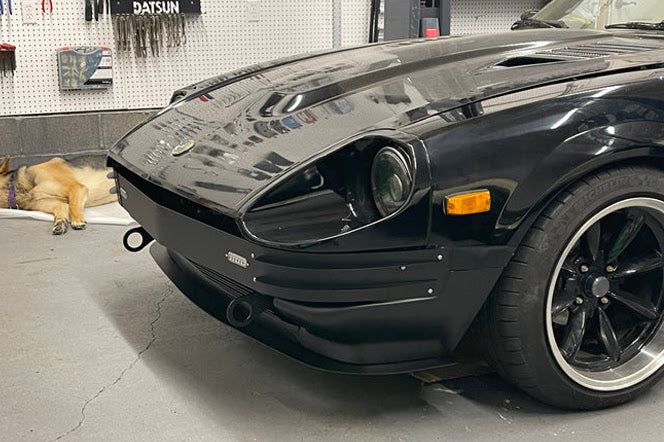
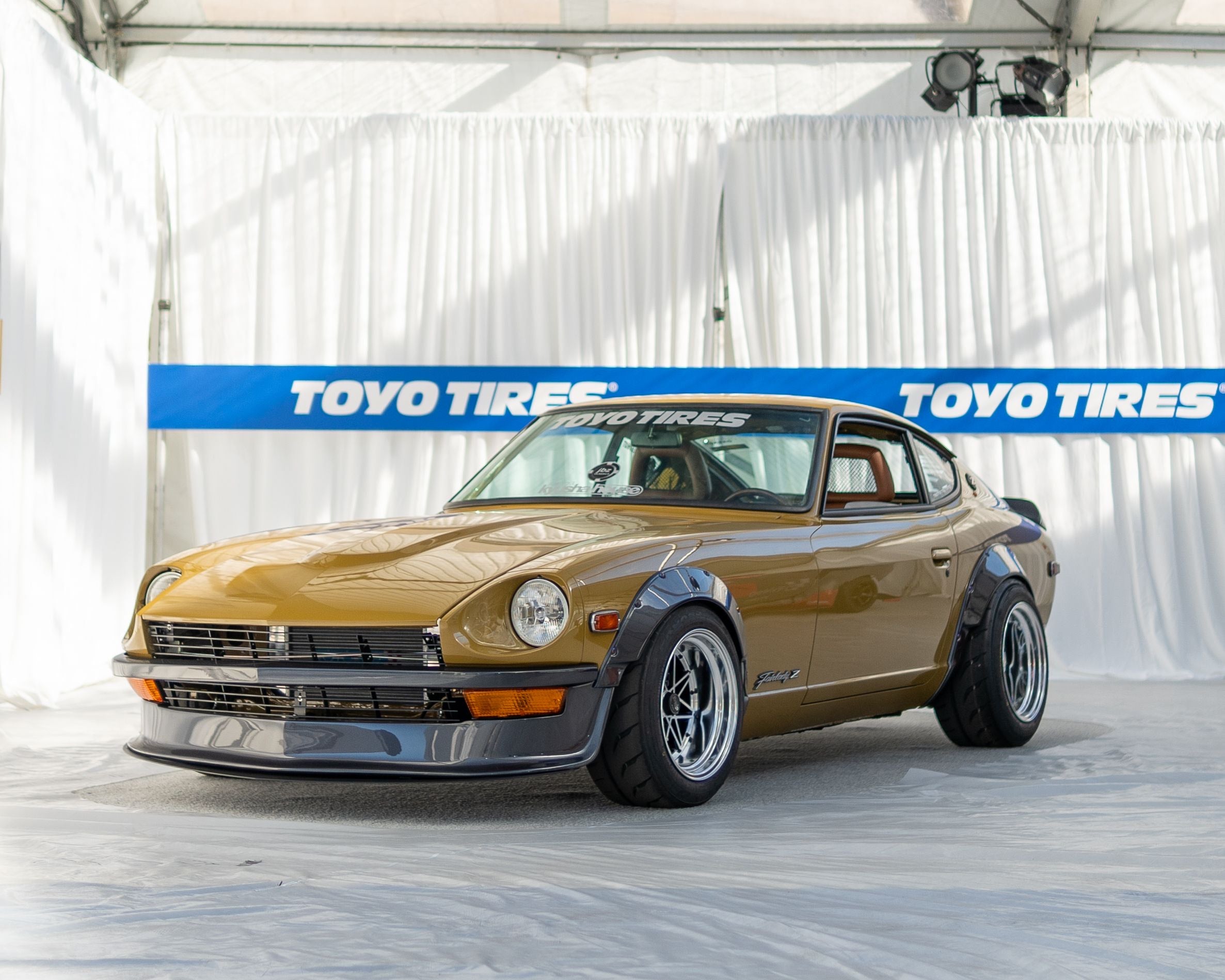
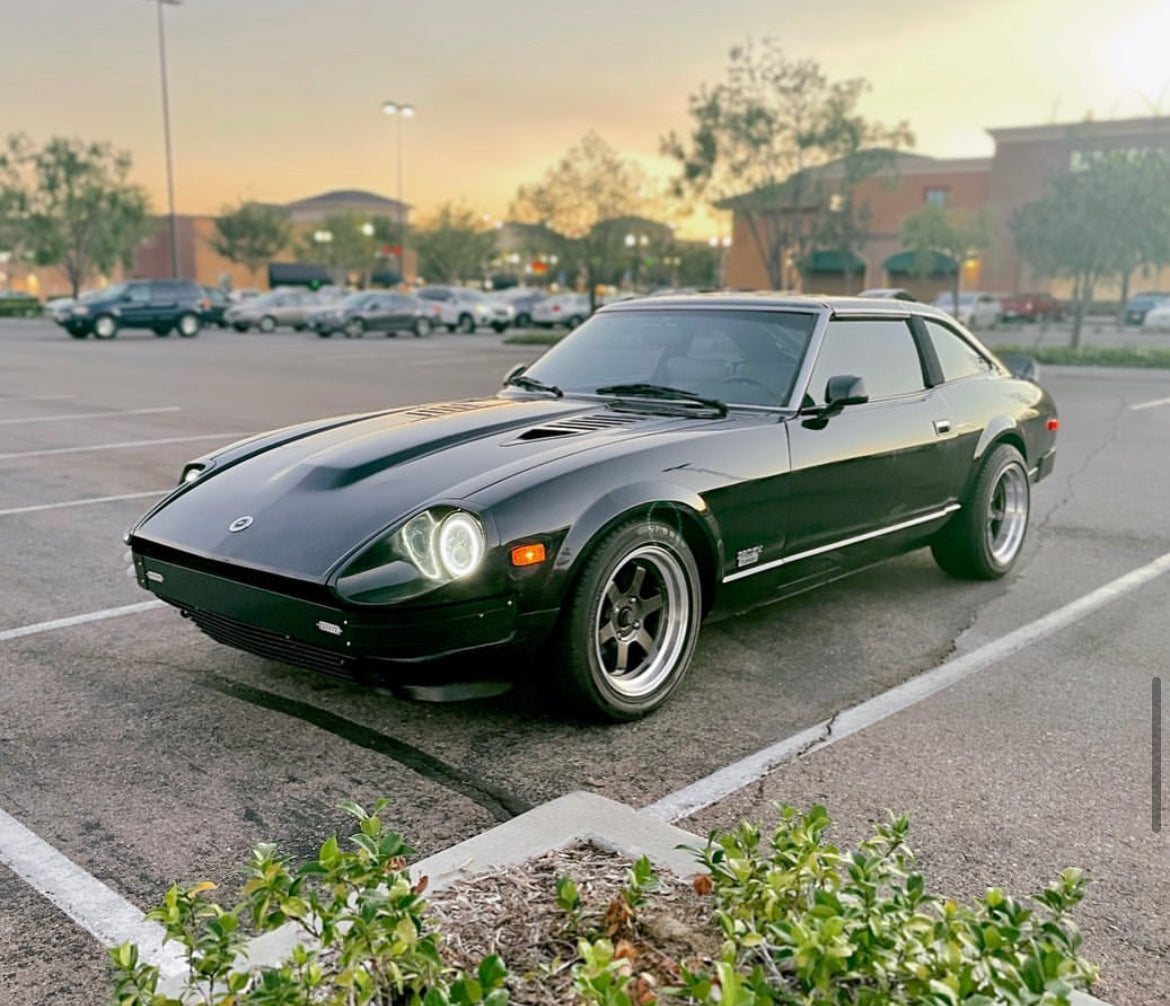
The stock 240Z came with a protruding chrome bumper and a fairly boxy lower fascia - not the car's best angle. The G-Nose replaces that with one smooth tapered profile that runs cleanly from the hood to the bumper. Side by side, these two front ends barely look like they belong to the same car, and the contrast is the whole appeal. For a car that already looks this sharp, it's a pretty dramatic change.
There's a little background worth learning about here - the G-Nose has never been a factory Nissan part. It's always been an aftermarket piece, and the fit and finish can be all over the place based on who made it and how well it was installed. Reproduction versions are pretty easy to find now, with plenty of manufacturers to choose from. Not all of them are worth your time or money, though. Quality does matter with this part - a poorly made or sloppily fitted G-Nose will make its problems known pretty fast.
Why Z Owners Love the G-Nose
The G-Nose gets attention for a reason - it changes the front end of a 240Z into something that looks like it was lifted straight from a 1970s racing paddock, and for plenty of owners out there, that deep connection to motorsport history is the whole point of the mod. The look actually traces back to the factory racing variants that Nissan built for long-distance and endurance competition. On a clean build, that extended nose doesn't read as a modification at all - it reads more like a restoration, as if the car was always meant to come out that way.
Within the S30 community, this mod helps. A well-executed G-Nose is usually a signal that the owner did their homework and put in the work - that kind of effort works at a meet and earns you a second look - and it'll pull a long comment thread on just about any forum.

Not every modification gets that reaction - the G-Nose just has a way of earning it. The impression tends to stay with you. Most 240Z owners who've seen a G-Nose build in person describe it as one of the rare moments where everything just clicks - the proportions, the stance and the way it nods to the car's racing history without ever feeling like a costume. It's a hard reaction to put into words - and once you've experienced it, it's even harder to shake. For plenty of owners, that one look is what gets the whole project started.
The car came with aggressive lines straight from the factory, and the G-Nose doesn't fight that at all - it just takes it a step further. The two of them feel like they belong together. Whether your build is going for a full period-correct race tribute or just a clean street car with a strong visual identity, the G-Nose feels right in either direction.
The Weight and Aero Gains That Matter
A G-Nose swap can have some measurable benefits, and a few of them are worth a look. The weight is the most obvious one.
With less weight over the front axle, the car just finds a better balance point, and the steering gets noticeably more responsive through the corners. For anyone who takes their Z out to track days or autocross events, that change does matter - it's the type of difference that you feel right through the wheel.

The second benefit is the airflow. Its lower and more tapered profile lets the G-Nose move through the air quite a bit more efficiently at speed - and if you're on a circuit and pushing the car hard, that aerodynamic edge pays off.
To be straight about it - if your Z mostly sees weekend drives and city streets, the aerodynamic gains aren't something that you'll realistically feel behind the wheel. At normal road speeds, the airflow improvement shows up on paper. But it's a pretty minor factor in day-to-day driving. The weight savings are there as well. But they're modest enough that a casual Sunday cruise will probably feel about the same either way.
It all can depend on how you actually use the car. Track drivers and autocross competitors have reason to try the weight savings and the more aggressive nose profile - with those builds, every small gain matters. For a street-only car, those same benefits are still worth having. They just make more sense as a welcome bonus instead of the main reason to go through with the swap.
The Real Safety Risks of a G-Nose
A metal bumper has the obvious advantage - durability. A low-speed hit won't do much to it, and that's what you want when you're squeezing a car into a tight parking space or trying to get through a busy street.
Fiberglass works very differently than metal does - it doesn't have that same give or flex and it's more brittle than it looks. A slow tap from a car door or a rogue shopping cart won't leave a dent - it'll crack or shatter the panel outright. Metal can take a hit and leave a dent - fiberglass just gives out. For standard street use, that's a gap in durability.

Tight parking spaces put the front end in danger every time you walk away from the car. The repair costs on a cracked fiberglass nose aren't cheap either, and they like to climb very fast. A replacement panel isn't always easy to find, and these noses are made in limited numbers. When one gets damaged, you're likely looking at a long wait, a high price tag or sometimes both. In my experience, the cost hits you all at once.
A G-Nose is a great modification - but it makes the most sense on a car that lives at shows or gets trailered to events. If your Z is a daily driver or just a weekend car that ends up in all kinds of unpredictable parking situations, that vulnerability is worth thinking through before you make the choice.
Poor Fit Can Ruin a Good Install
A G- is one modification that can change the look of the front end of a 240Z - and if you're planning to order a kit, you should have a sense of what you're actually in for with the install.
With the cheaper kits, the prep work gets quite a bit more involved. Most of them are going to need heavy trim work, filler work and some alignment work before they'll sit anywhere close to right on the car. The S30 market has no shortage of options, and the quality difference between the kits can be pretty wide. A nose that doesn't fit well will make the whole front end look lopsided.

Panel gaps are without a doubt the most frustrating part of this whole process - and I've seen plenty of them done wrong. Even spacing is detail-oriented work, and it takes a trained eye for the bodywork to pull it off well. If the gaps are even slightly off, the front of the car will start drawing attention for the wrong reasons.
Be honest with yourself about your skill level. The right tools, a decent workspace and a whole lot of patience are all part of the equation with fitment work like this - and not everyone has all three. If a body shop is doing the installation for you, call ahead and get a quote before you're locked into anything. Labor costs pile up fast, and the total will swing quite a bit based on how much correction your kit ends up needing.
What a Cut Does to Your Car Value
The first piece to figure out is what your 240Z actually means to you - whether it's a car that you want to drive hard, modify and make your own or something that you're holding onto as an investment. That answer will shape just about every call that follows, and plenty of owners don't sit with it long enough before they ever pick up a grinder.
A G-Nose installation will usually need some cuts or holes drilled into the original sheet metal. On a matching-numbers car, that's a permanent modification - once it's done, it can't be undone.

The values on early Z cars have climbed sharply, and plenty of owners who follow Bring a Trailer have started to regret the permanent mods they made years ago. A car that still has its original body panels uncut tells a full story. That story is worth actual money to collectors and hardcore Z enthusiasts. Uncut examples usually pull more at auction than otherwise comparable builds, and I've seen that gap widen considerably over time. The originality premium is very real.
None of it makes the G-Nose the wrong call. For a dedicated track car or a personal build that you're planning to drive hard and have fun with, originality probably isn't at the top of your list - and that's a perfectly valid place to be. The G-Nose is a great-looking piece, and on the right car, it earns its place.
If any part of you looks at your Z and sees it as something worth holding onto for the long run, give this call a little more time before you make a cut that can't be undone.
Other Options That Are Less Permanent
The G-Nose is a gutsy move and not everyone is ready for that level of commitment - which is fair. A full conversion is a big call to make on a car that actually means something to you. The great news is that there's plenty of middle ground between a stock nose and a full G-Nose conversion. A few options are worth your attention.
Out of the alternatives on the list, a BRE-style front air dam is probably the strongest option (it gives the 240Z that purposeful sense of racing character that makes you stop and do a double-take in a parking lot) and does that without any permanent modifications to the body. For a numbers-matching car or a build with history behind it, that's a big deal.

A chin spoiler or a soft front lip is another option that's worth looking at, and one that tends to play well with a wider number of builds. And if your taste changes, either of these can come off.
The appeal of the G-Nose is real, and I've seen it come together beautifully on the right car. The choice just doesn't have to be all-or-nothing. A full conversion is always on the table, and so is a more gradual path that still takes the car in the direction that you want. Plenty of great-looking 240Zs have never gone near a G-Nose at all - it's worth keeping in mind before doing anything permanent.
Build Your Dream Car
The G-Nose is one modification that tends to weigh on you a bit more the longer you sit with the choice. That hesitation, by the way, is actually worth something - it means that you're taking the right amount of care with this. The look is pretty striking, and the racing history is very real. The trade-offs around safety, fit and what that means for a car's story once a saw touches the original metal are just as real.
The right answer can depend on your situation. A car that goes to track days and show events lives a very different life from one that sits on a city street most of the week. How much you care about matching numbers, how comfortable you are with bodywork and where you see yourself with the car five years from now - it deserves some thought before anything. No universally correct answer exists here, and anyone who tells you otherwise probably hasn't considered it as closely as you have.
No matter which direction you go with it, the best outcome is a car that you can legitimately call yours - whether that's a cleanly fitted G-Nose or a beautifully preserved stock front end.

When the goal is a Z that feels just the way that you want it, we make a full line of custom parts at Skillard.com that are built specifically for Datsun Z cars - the 240Z, 260Z and 280Z. Our catalog covers a pretty wide range from bumpers and spoilers to aluminum door cards and center consoles, so there's a chance we have what your build needs. Check us out at Skillard.com to see the full lineup and find the right pieces for your project.