

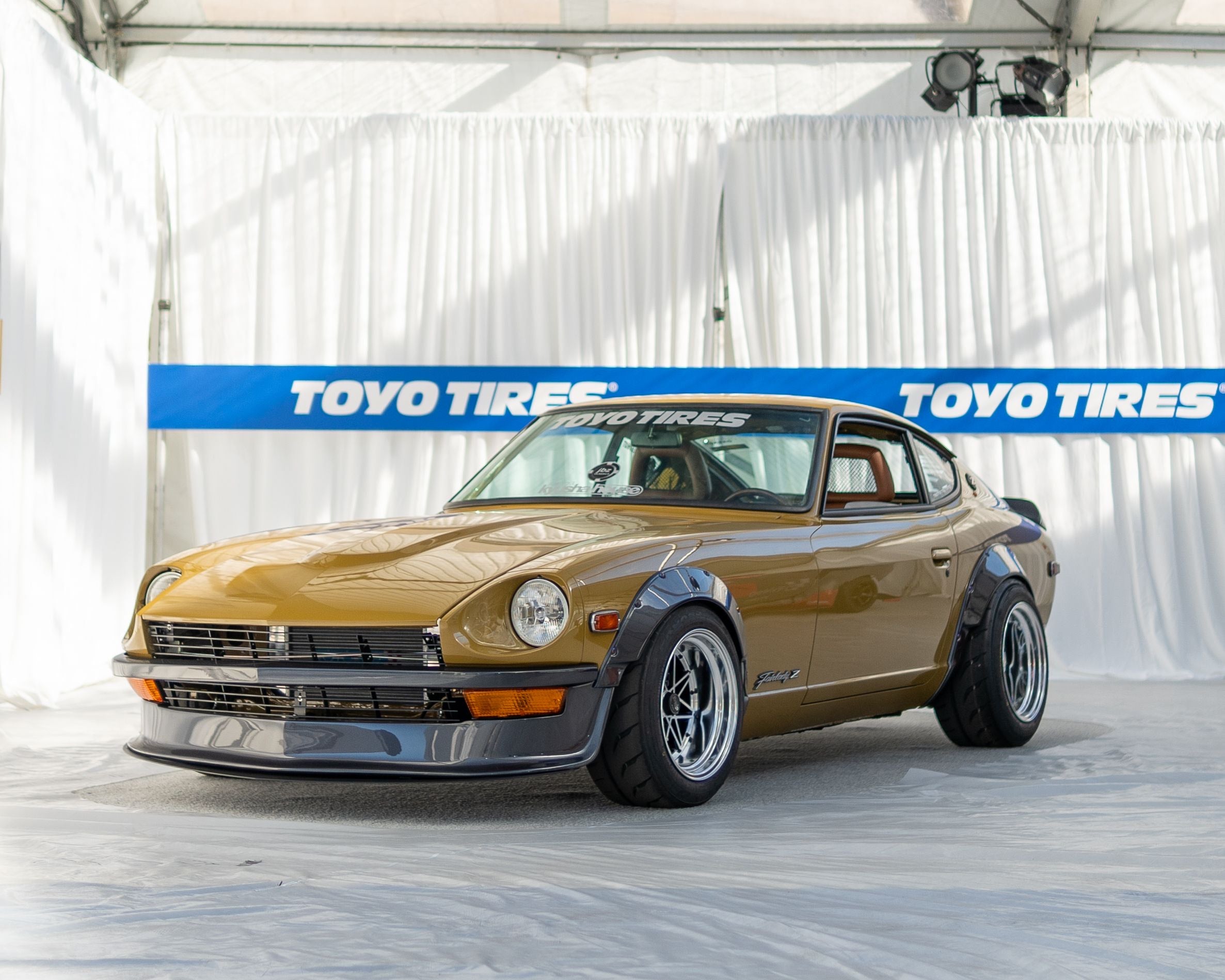
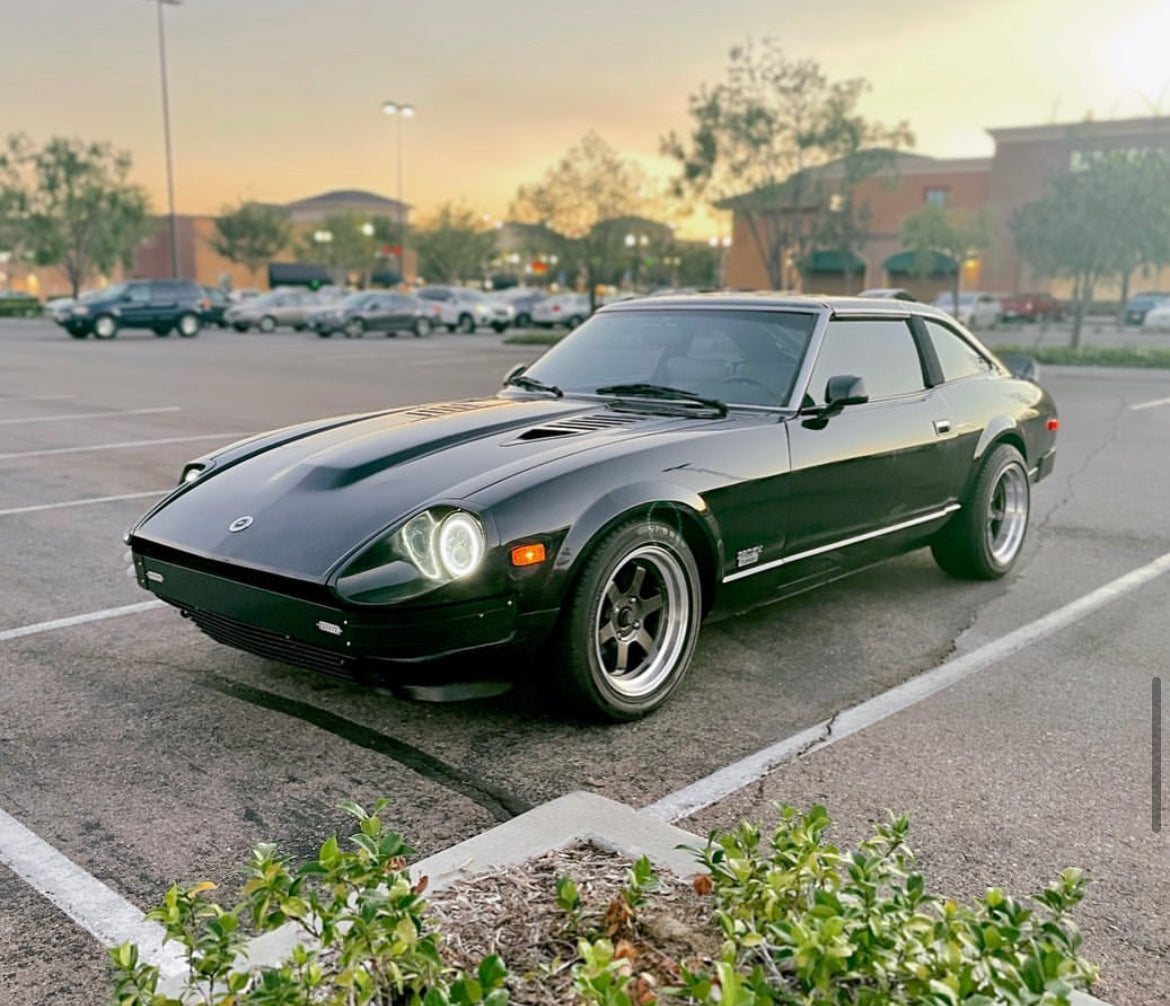

The metalwork alone is far heavier than a standard track build calls for - suspension work on a rally-spec car is a whole different process compared to a weekend autocross setup. Underbody protection is another piece that needs to be mapped out well before any parts get ordered, because your ride height and clearance decisions affect just about everything else.
Add to that the challenge of finding period-correct parts. The right parts are hard enough to track down on their own, and structural integrity is a whole separate headache - one that gets harder with every new modification to the combination.
A big part of why builders keep coming back to the S30 platform (even with all this) is the car itself. The long hood, that classic straight-six silhouette and a genuine factory rally pedigree give it a presence that's pretty hard to replicate (this wasn't a car that got squeezed into motorsport as an afterthought - it was built for it).
The mechanical foundation backs that up as well. You get four-corner independent suspension, a sturdy inline-six and a unibody chassis light enough that your upgrades actually show up in the numbers (every dollar and every hour that you put in has a measurable payoff). This platform rewards the work that you put into it, and plenty of cars out there just can't say the same.
What you get is a car that earns every bit of attention it gets and looks as great as it performs. For a rally build, that's the whole point.
Let's get started on some of these Safari Rally build ideas for your Datsun Z!
Table of Contents
The Z Has Real Safari Rally Roots
Before you get too deep into your build plans, it's helpful to try to learn a bit about this car's history.
The Datsun Z had a genuine factory-backed rally program in East Africa during the early 1970s - and a successful one at that. Nissan sent works-prepared cars with professional drivers to compete in one of the most demanding road rallies in the world.
Edgar Herrmann is probably the most well-known name from that campaign. A German factory driver, he ran a 240Z in the East African Safari Rally and came back with results that were strong enough to put the Z on the map as a performance car.

What made those cars so effective was the balance Nissan managed to find between raw performance and reliability. The Safari Rally had a well-earned reputation for being extremely hard on vehicles, with thousands of kilometers of unpaved roads, river crossings and brutal terrain. A car that was only fast wouldn't finish, and a car that was only tough would never win. Nissan seemed to get both right at once.
That history is actually a great place to start your build because it tells you what the Z was like before it was ever modified. Builders say that a review of the original works entries legitimately changes how they think about their modifications - around suspension travel, weight distribution and mechanical simplicity. Up next is the platform question - whether a 240Z or a 280Z is the better foundation for what you're trying to build.
What Sets the 240Z and 280Z Apart
The 240Z and 280Z share the same basic bones, but once you sit down to plan a build, the differences start to matter quite a bit.
The engine difference between these two is one detail to keep in mind. The 240Z ran on the L24 (a 2.4-liter inline-six), and the 280Z went with the L28 at 2.8 liters. That extra displacement gives you a bit more torque right out of the factory, which is a pretty nice place to start if you're planning to run the car hard across the long rally stages.
The 280Z also came with fuel injection and emissions hardware that the original Safari cars never had to worry about - the extra equipment does add up in terms of weight. Most builders pull it out pretty early on, and once that's done, the weight difference between the two cars shrinks considerably. The heavy U.S.-spec bumpers are another piece that comes off pretty quickly.

The 240Z has had a longer run in the aftermarket world, which makes it a little easier to track down performance-focused parts. The L28 holds its own just fine, though - there's a strong community behind it and plenty of parts support out there to work with.
The question (strip everything else away) is what you care about most. Whether you want a platform that stays a bit truer to the spirit of the original 1971 Safari cars or a little extra displacement to work with right from day one, I personally don't think either answer is wrong - these two cars are more than capable of what this build calls for, and either one can get you right where you want to go.
Suspension Travel and the Work It Needs
The S30 chassis runs a MacPherson strut up front and a Chapman strut out back. They're decent starting points for a build, and they can take a fair amount of modification before they start having actual problems. Put either one on a rough-terrain rally course, and you're asking quite a bit from a suspension that was never built for that punishment.
Plenty of builders don't see how much work this stage actually takes. Stock mounting points only have a set amount of tolerance built into them, and they'll fail pretty fast once you've pushed past that limit without the reinforcement work. It's one of the areas on the build where shortcuts have a reliable way of catching up with you.

Long-travel coilovers built specifically for the S30 are out there, and some fabricators go with the full custom strut conversion to get the geometry right where they want it. Either one can do the job. The strut towers themselves are going to need reinforcement in either case, though. Most builders box them in and add gussets to spread the load across a wider section of the chassis - and without that extra support, all that added suspension travel has to go somewhere. The body shell ends up taking on stress that it was never designed for.
Upper strut mounts are another area that's worth a hard look. The factory rubber mounts will compress and move around under hard use, and plenty of builders will swap them out for rigid or pillow-ball units to hold the suspension geometry where it needs to be, though it does bring a bit more road noise into the cabin - that's just part of the deal. For a build meant to move fast over rough terrain, the gain in cornering consistency makes that trade worth it.
Skid Plates for the Full Underside
The Datsun Z sits pretty low from the factory - and on a well-paved road, that's a nice quality to have. On a rally stage, that same low stance puts the oil sump, transmission casing and fuel tank right in the path of rocks, ruts and debris.
A cracked sump miles from nowhere is about as bad as it gets - the oil pressure drops almost immediately, and once that happens, the engine isn't far behind. It's one of the failures with no way back. The skid plate coverage lands at the top of the list on any Z build for just that reason, and I'd call it an absolute must.

Heavy-gauge steel plating is the standard pick for underbody protection, and most builders stay in the 3/16-inch to 1/4-inch range. The sump plate tends to get the most attention. That makes sense. The transmission and the fuel tank are just as exposed and just as vulnerable, and should get the same treatment. Every panel in the system has a job, and one gap in that coverage is enough to end your day on stage.
The underside of a build has three zones - the sump plate covers the front, the transmission skid covers the middle, and the fuel tank guard takes care of the rear. A hard hit to any one of the unprotected areas can pull you out of an event just as fast as a hit anywhere else on the car. Plenty of builders cover the sump and transmission well and then leave the fuel tank exposed, which is a danger the second the terrain gets rough. The full underside coverage is the only version of this setup that actually holds together out there.
How the L-Series Stays Cool Under Pressure
The L24 and L28 engines have a well-earned reputation for reliability - and it's a reputation they've backed up over the years. That said, rally use puts them through a level of stress that standard street use just doesn't come anywhere close to. A highway cruise is easy enough - a rocky riverbed at full throttle for an hour straight is a whole other world. At those low speeds, your engine loses the natural airflow that it counts on to hold its temperature in check - that's just where problems start to pile up.
An upgraded radiator is one of the first upgrades worth the money. A higher-capacity unit gives the cooling system quite a bit more room to breathe when the engine is under heavy load and barely moving - a situation that's constant on any technical stage. An external oil cooler brings another layer of protection, and it holds oil temperatures in a range that your engine can take over a punishing run.

Dust is the other big challenge to plan for during your build. Safari conditions can push a massive amount of fine debris straight into your intake - far more than any stock air filter was ever made for. A pre-filter, sometimes called a pre-cleaner, sits in front of your main filter and catches the bulk of that dust before any of it gets close to your engine. It's a worthwhile addition, and it pays for itself fast on dry tracks - hands down one of the more underrated pieces on this whole list.
A clean airflow layout is what actually ties the whole build together, and it's worth mapping this out early - well before the layout gets locked in and it gets harder to change. Where your intake is pulling air from, how the hot air escapes from the engine bay and whether your coolers have a clean path to fresh air - these are all details that define how well the whole system holds up when it's being pushed.
How a Roll Cage Stiffens the Whole Car
A well-tied-in roll cage will stiffen the whole chassis, and on rough terrain, that extra rigidity has a very real effect on how the car responds beneath you. It's an upgrade that delivers in more than one way.
Most first-time builders treat the cage as an afterthought - something to sort out near the end of the build once the more fun parts are done. A little bit of advance planning goes a long way here. Your mounting points need to anchor into the strongest sections of the floor and the firewall, and gussets at the main joints are what spread the load across the whole structure, so it doesn't all pile up at one point.

Door bars are worth some real thought. A basic X-brace or a diagonal bar in the door opening can add a fair amount of lateral stiffness to the entire body shell - worth the time. On a Z, the door structure doesn't have much natural rigidity on its own, and the cage has to step in and is part of what holds the car together. Without it, every bit of that flex will be very hard to miss on anything more demanding than smooth pavement.
The bolt-in versus welded debate is worth settling before you spend money on either one. A bolt-in cage is much easier to live with on a dual-use street car - more forgiving day-to-day, easier to pull out if you ever need to and with far less prep work all around. A welded cage that's well tied into the chassis is what you actually want if the car will take a beating across rocky terrain and long-distance stages. For heavy off-road use, there's no substitute for it.
Spare Tires, Lights, and Fenders for the Build
With the cage in and the mechanical work wrapped up, the build finally starts to look like something real. Every part that goes in from here has a job first - the way it looks is a bonus.
Roof-mounted spare tires are a great example of this. On a long-distance rally stage, a flat tire with no spare on board is a day-ending problem - there's no way around it. A roof mount puts the spare right where you need it, and it also frees up the interior for navigation equipment and gear that actually belongs inside the cabin.

Auxiliary light bars follow the same logic. Rally stages that push into the evening need far more light than any stock setup can realistically put out. A well-mounted light bar gives the driver a longer and wider field of vision at night, which goes a long way when you're at speed - and it also happens to look sharp on a rally car.
Extended fender flares are one of the rare mods where the looks and the practicality work together. A wider track gives you more stability on loose or uneven ground, and the flares are what make that extra width street-legal and clean.
As far as looks go, it's also one of the more dramatic changes that you can make to a Z-car - the body lines on these were practically made for a wide-body look.
Build Your Dream Car
A build like this rewards patience - and maybe more to the point, it rewards the planning that happens well before any metal gets cut. The mechanical and structural side of a project doesn't usually get the spotlight, and it's almost never the glamorous part. Everything else on the vehicle literally sits on top of that work, though. Get the suspension travel, the underbody protection, and the cage figured out early, and the rest of the build tends to come together far more on its own.
There's also something quite satisfying about a project with this much history behind it. That context changes how the whole project feels, almost from the ground up. That can make the harder calls a little easier to push through when they come.

A build that looks and performs just the way that you want it to will take the right parts. In most cases, those aren't easy to pull together from just one place. At Skillard, we specialize in custom parts built just for Datsun Z-cars (the 240Z, 260Z and 280Z), and our catalog has quite a few upgrades to choose from. Bumpers, spoilers, aluminum door cards, center consoles and quite a bit more are all part of what we carry, so no matter where your build is headed, there's likely to be something in our lineup that's worth a close look.
Check us out at Skillard.com to get started when you're ready to pull a project like this together. Take some time to look through the full catalog, get a feel for what's out there and work out which parts belong on your build. A project at this level deserves quality parts to back it up, and our lineup is well worth the time.

