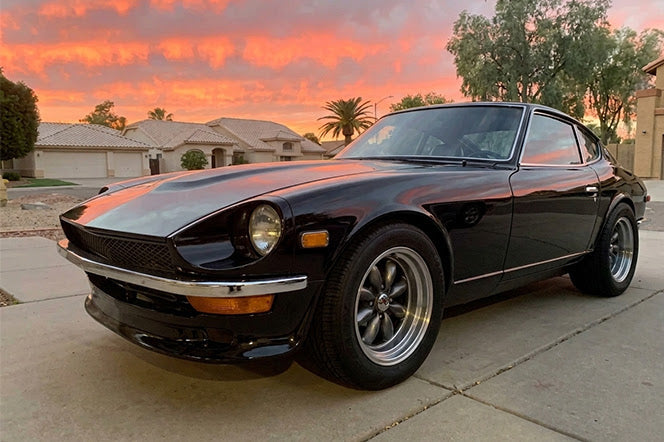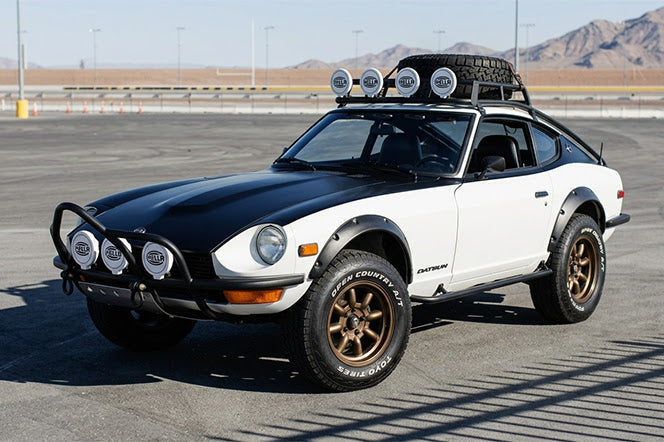

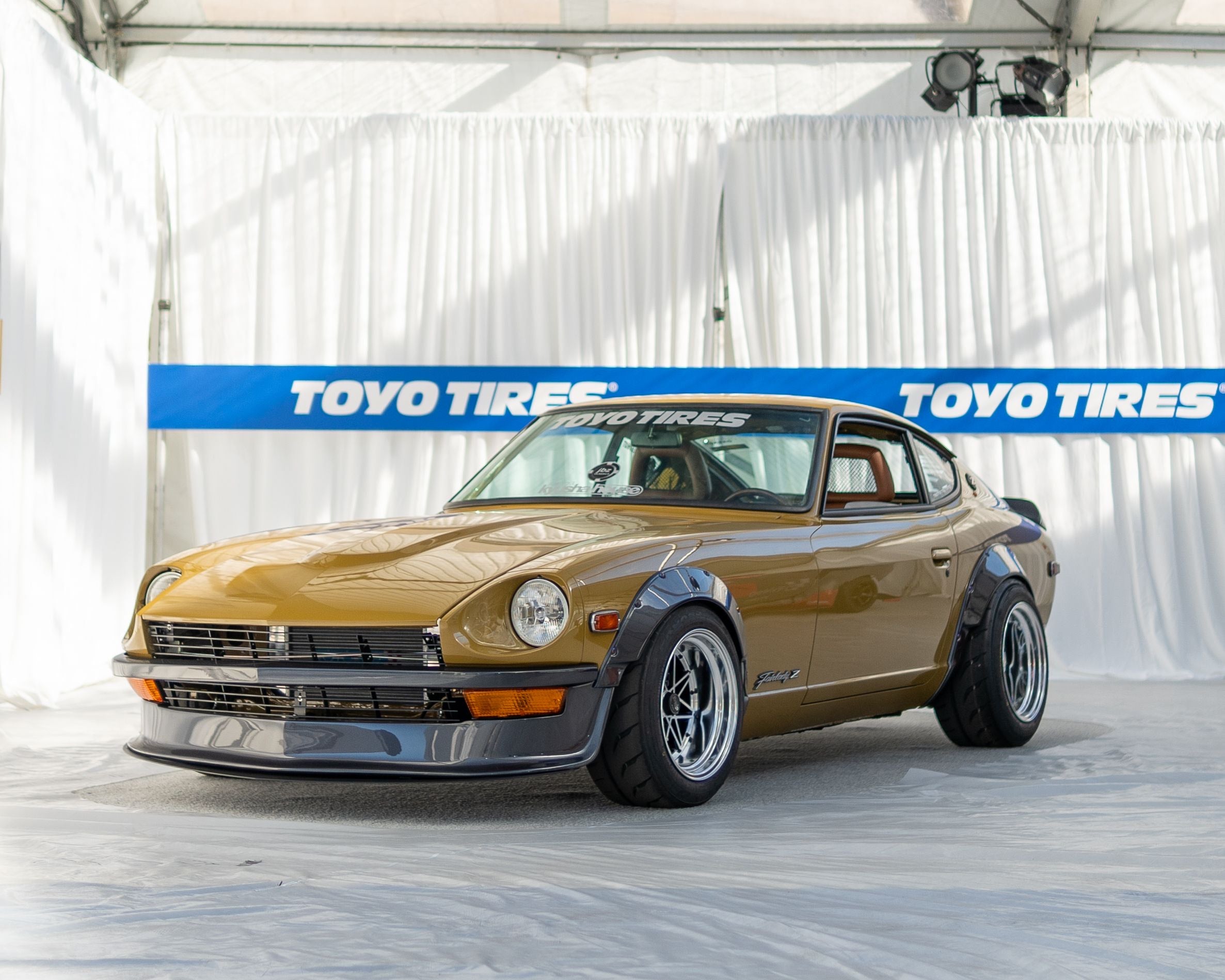
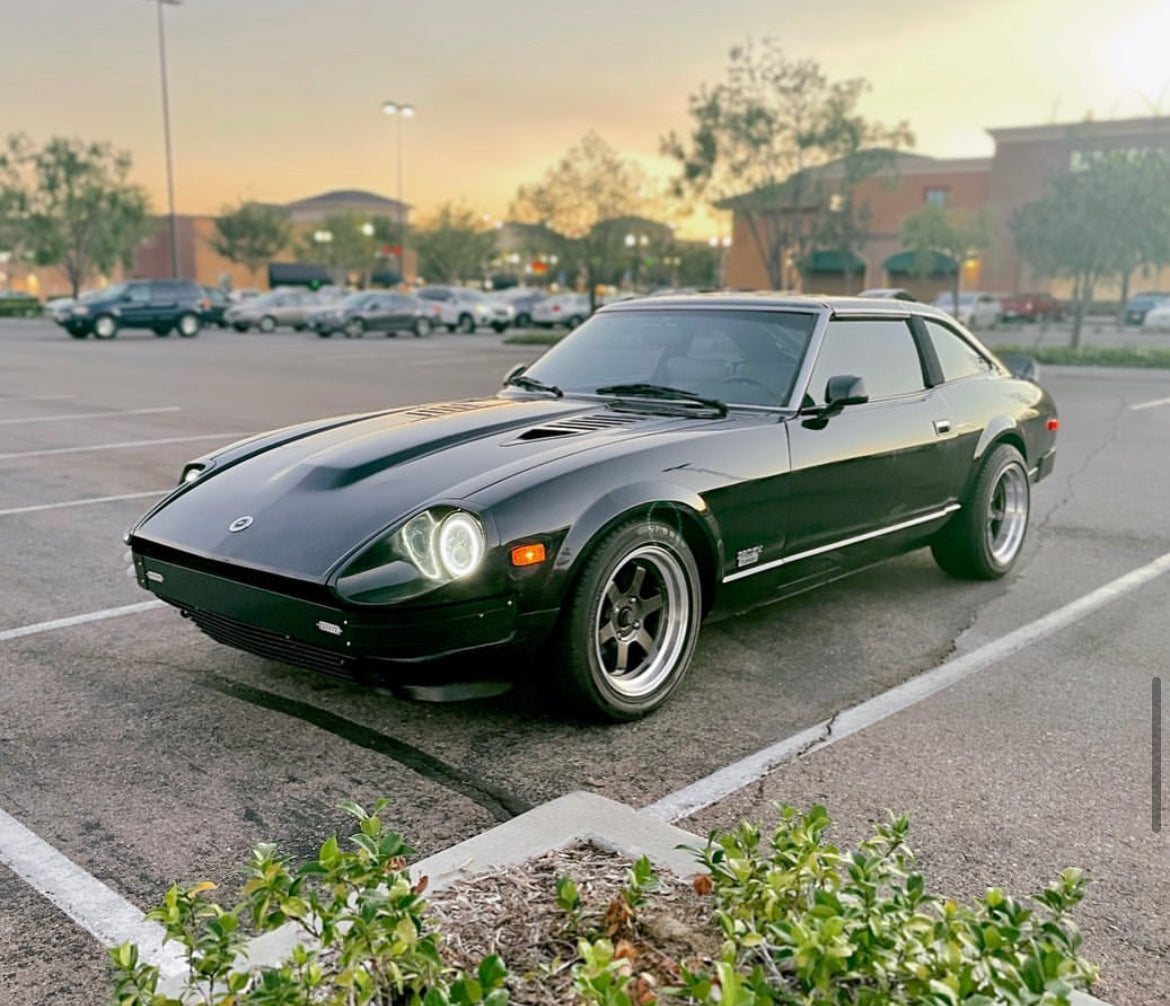

A window tint on a Datsun 240Z is a much different job than you'd do on any modern driver. The S30 chassis dates back to 1970, and every choice that you make on a car like this counts - especially if you've already put actual money and time into a restoration. A film that works just fine on a late-model sedan can look all wrong on a 50-year-old classic - it's also the case when there's compound-curved glass and aging rubber seals to contend with.
Most owners who come looking for this information already know it's more involved than just peeling film off a roll and pressing it onto flat glass. The 240Z's wraparound rear hatch alone is one of the harder surfaces that you'll run into - the curved glass pushes back against the film in ways that a flat pane on a modern car just won't do. Add in the brittle window seals and tint laws that can vary from state to state, and your margin for error gets pretty small.
What's at stake with a 240Z interior is that most of it can't be replaced. Vinyl dashboards, original seats and period-correct trim are either nearly impossible to find or long gone from the market - and UV damage has a way of quietly doing its work long before you'd ever see it. A quality tint job takes care of that problem in the background and keeps everything looking right for years to come. Get it wrong, and you're left with lifted edges, film that has bubbled up or a legal issue that forces the whole job to come off. At that point, a bad install has probably cost you twice what a quality one would have.
Table of Contents
Protect Your 240Z Interior With Window Tint
The Datsun 240Z is over 50 years old at this point, and the interior materials it left the factory with were never built to last. Vinyl dashboards, seats, and trim all wear down under prolonged sun exposure, and the damage tends to come on slowly, well before most owners even know anything is wrong.
For anyone with an original or restored interior, UV rays are one of the most destructive forces that work quietly against the car every day. Prolonged sun exposure causes vinyl to crack, fade and warp - repairs that can get expensive fast and sometimes the damage ends up being permanent. A careful interior restoration can run thousands of dollars, and no one wants to put in all that work only to watch the dashboard start splitting apart a few years later. Fortunately, it's very much an avoidable outcome.

Window tint is one of the best available fixes for this exact problem. Ceramic and carbon film are options, and either one is capable of blocking as much as 99% of UV rays before they make it through the glass. The factory glass on a 240Z gives almost none of that protection on its own - it just wasn't designed with long-term UV defense as a priority.
After everything that goes into a 240Z interior restoration, you'd hate to leave it exposed to the one force that'll damage it fastest. The interior materials in these cars are usually the first parts to deteriorate when they're not protected from the sun, and a cracked dash or faded vinyl can undo a decent chunk of that work. A quality tint film is a pretty minor expense compared to what a full redo would cost.
Tint Laws and Classic Cars
Window tint laws in the United States are not one uniform standard - and if you own a 240Z, that matters quite a bit before you go ahead with a tint job. Most states do hold to a minimum of 70% VLT (visible light ) for windshields. That number stays pretty steady across the board. It's the side and rear windows where it gets a whole lot less predictable, and the laws there can change pretty noticeably from one state to the next.
A tint level that passes inspection just fine in one state can earn you a fix-it ticket across a state line. What passes in Nevada won't always be legal in Georgia - it's not a risk worth taking, especially if you've already put quite a bit of time and money into a restoration or a build.

A few states do have exemptions written into their laws for classic and vintage vehicles, which could work in your favor with a car like the 240Z. With the right exemption, you could be eligible for slightly darker tint compared to what's normally permitted. These exemptions aren't available everywhere, and what it takes to qualify can change quite a bit from one state to the next. Some states have strict definitions of what counts as a "classic" vehicle, and others are a bit more relaxed about it. From what I've seen, plenty of owners just assume they'll qualify without ever actually looking it up.
Your state's DMV website is the best place to start - pull up the laws or even book an appointment. It's admittedly not the most fun 20 minutes that you'll ever spend. But it can save you from paying for the same tint job twice. A little bit of research done ahead of time is worth it.
Which Film Type Is Right for You
Ceramic and carbon film are usually the most popular window tint options for classic cars like the 240Z, and there's a reason for that. The two of them do a great job of keeping heat out of the cabin, and neither one will leave your windows with that reflective look that tends to clash with a vintage build. On a restored car, the visual touches are everything, and these two options won't get in the way of that.
Metallic film is another strong option for heat rejection - and it legitimately does a great job at it. The main complaint from classic car owners tends to be about the finish. That mirror-like look doesn't quite fit what most classic car owners are going for.

Dyed film sits at the lower end of the price range, and the lower cost is hard to ignore - but it does have some downsides. Heat rejection is pretty minimal, and it tends to fade noticeably over time. After the time and money that goes into a 240Z restoration, it's not the place to skimp. Every time you look at that car, you'll know what you chose.
Carbon film sits right in the middle of this, and for builds, that's where you want to be (it holds its color much better than dyed film does over time, and the heat rejection is pretty decent, and there's no metallic sheen to worry about, which is a benefit for classic car builds).
Of all four options, ceramic and carbon are the two that are most worth a hard look for a restored 240Z. Either one will do a great job of protecting your investment, and each one will leave the windows looking like they actually belong on the car.
The Best VLT Range for a Classic Z
Most 240Z owners land somewhere in the 35% to 50% VLT range, and it's a well-reasoned choice. VLT, or visible light transmittance, is a way to measure how much light a film lets through the glass. The higher that number is, the more light gets in - so at 50%, the film is still on the lighter and more natural-looking end. But 35% gives the car a noticeably darker look without pushing it into an aggressive or full privacy-tint territory.
That balance matters for a car like the 240Z. It has a slim and athletic profile, and the tint needs to feel understated and intentional - something that follows the natural lines of the car instead of working against them. Go too dark and the whole look starts to feel a bit off.

The legal side is also worth some thought. Any film that falls below your state's legal limit is an open invitation for a traffic stop, and classic cars already draw more attention from law enforcement than most other vehicles on the road. A film somewhere in the 35% to 50% range keeps the car looking great and makes it much less likely that you'll run into any problems.
Tint quietly shapes the whole look of a car. A film that's too light barely registers on the eye, and one that's too dark can make even a great-looking car feel heavy and closed off. The 35% to 50% range gives you plenty of room to find the right shade for your build, your paint color and the direction that you're going for. It's not the biggest choice on the build. But the right tint does pull the whole car together.
Why Curved Glass is Harder to Tint
The rear hatch window on a 240Z is one of the harder pieces of glass to tint and it's worth learning about what you're actually up against before you book an appointment anywhere.
The wraparound curve is where most of the difficulty lives. Tint film is flat, and a curved surface just doesn't want to play along without a little persuasion.
The most common problems on this particular window are bubbles along the edges, creases near the corners and poor adhesion across the middle. The curve is gradual enough that an installer might treat it like a standard flat window - it's a mistake that this window has very little patience for.

Not every shop has experience with curved glass like this. Plenty of them do great work on flat windows and side panels (it's fine), but the technique changes quite a bit once the surface starts to curve. It's worth asking right from the start whether the installer has worked on classic Japanese cars or curved rear hatches before. That one question will tell you quite a bit about whether they're the right fit for this.
The rear hatch window also happens to be the most visible window on the car from behind, which raises the stakes quite a bit. A small flaw on a side window is pretty hard to place. On the rear hatch of a 240Z, it's right there in plain view every time somebody walks up behind the car - and on a car this recognizable, that does matter.
Check the Window Seals Before You Tint
The rubber seals on a Datsun 240Z are well over 50 years old at this point, and rubber just doesn't age all that gracefully. After five decades, those seals are more than likely cracked, shrunken or brittle - and once that happens, the problems start to pile up.
On older cars like the 240Z, worn or damaged window seals are one of the biggest reasons a tint job fails before its time. Even the tiniest gap in a seal is enough to let moisture creep in underneath the fresh film, and from there, it's just a matter of time before the edges start to lift and peel away from the glass. A perfect installation doesn't save you from this - the film can only be as sound as the surface underneath it.

Before any tint goes on, every bit of window rubber on the car needs to be checked over closely. Give it a gentle press with your finger, check for any visible cracks and make sure it still sits flush against the glass. If the rubber has pulled away from the frame (or it's gone hard and brittle), it does need to be replaced before the tint work can start.
That's a step that often gets skipped - and it's a mistake that shows up all the time. New film over compromised rubber won't last - the seal will continue to deteriorate, moisture will find its way in, and the tint will start to fail. Window tint for a classic car doesn't come cheap, and neither does the labor. That investment, undone within a year by a single bad seal, is a pretty frustrating outcome - and one that's very avoidable.
Leave the Tint Job to a Pro
Window tint on a 240Z is not a normal weekend DIY project. The compound curves on these cars are pretty brutal to work with. Without access to the right heat guns and the tools for the job, your film is almost certainly going to lift, crease or bubble up around the edges. A professional installer will have the right equipment and the experience needed to get the film shaped correctly on the first try.
The seals deserve some attention as well. Those aged rubber seals that we mentioned earlier are already in rough shape. A careless install can add just enough pressure or moisture to push them even more out of position. An experienced installer will know how to work around those delicate edges without just forcing the film flat and losing the seal in the process.

The car's value matters too. A Datsun 240Z in great shape is a machine worth protecting. A bad tint job on a show-quality car is expensive and a genuine headache to undo. The film removal on curved glass is already much harder than the original install was. That doesn't even include any damage left behind - so it's well worth doing it right from the start.
When you do go with a professional, make sure to ask them first whether they have any experience with classic Japanese sports cars or at least with heavily curved glass. Not every shop does this. The 240Z is legitimately not the car to let just anyone figure it out on.
Build Your Dream Car
A window tint job on a classic Z starts well before the film ever touches the glass. Your state's tint laws, the film itself and the condition of your window seals are all worth your attention from the start - and each one can affect how the final result looks and holds up. The cars that get the prep right usually look sharper and hold up quite a bit better over the years.
A 240Z is a car that deserves your full attention. These cars have earned a strong reputation over the decades, and the quality of your build or restoration will show in every choice that you make along the way. A little extra research and some patience in the early stages will pay off when you're working with something this rare - and this well-built.

With the glass squared away, the rest of the exterior and interior are worth just as much of your time and budget. At Skillard.com, we build custom parts made just for Datsun vehicles - the 240Z, 260Z, 280Z, and a handful of other models are all in our lineup. Parts range from bumpers and spoilers to aluminum door cards and center consoles, so no matter how far along you are in a restoration (or if you're just starting to put together a wish list), there's a chance that you'll find something that lines up with the direction that you want to take the build.
It's worth a few minutes of your time to browse Skillard.com and see what we have available. Our parts are built specifically with these cars in mind. That dedicated design does show in how well everything fits and functions.