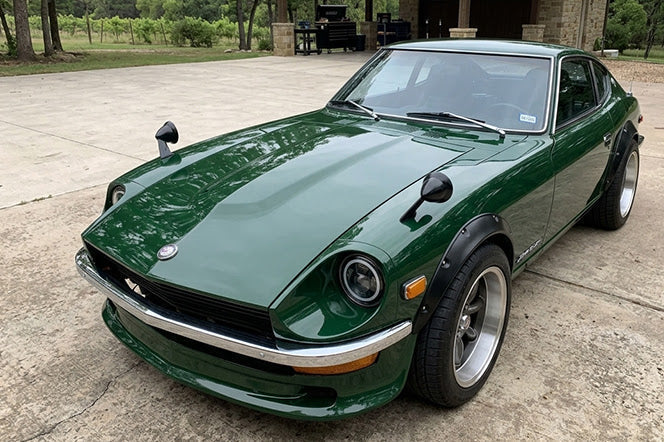


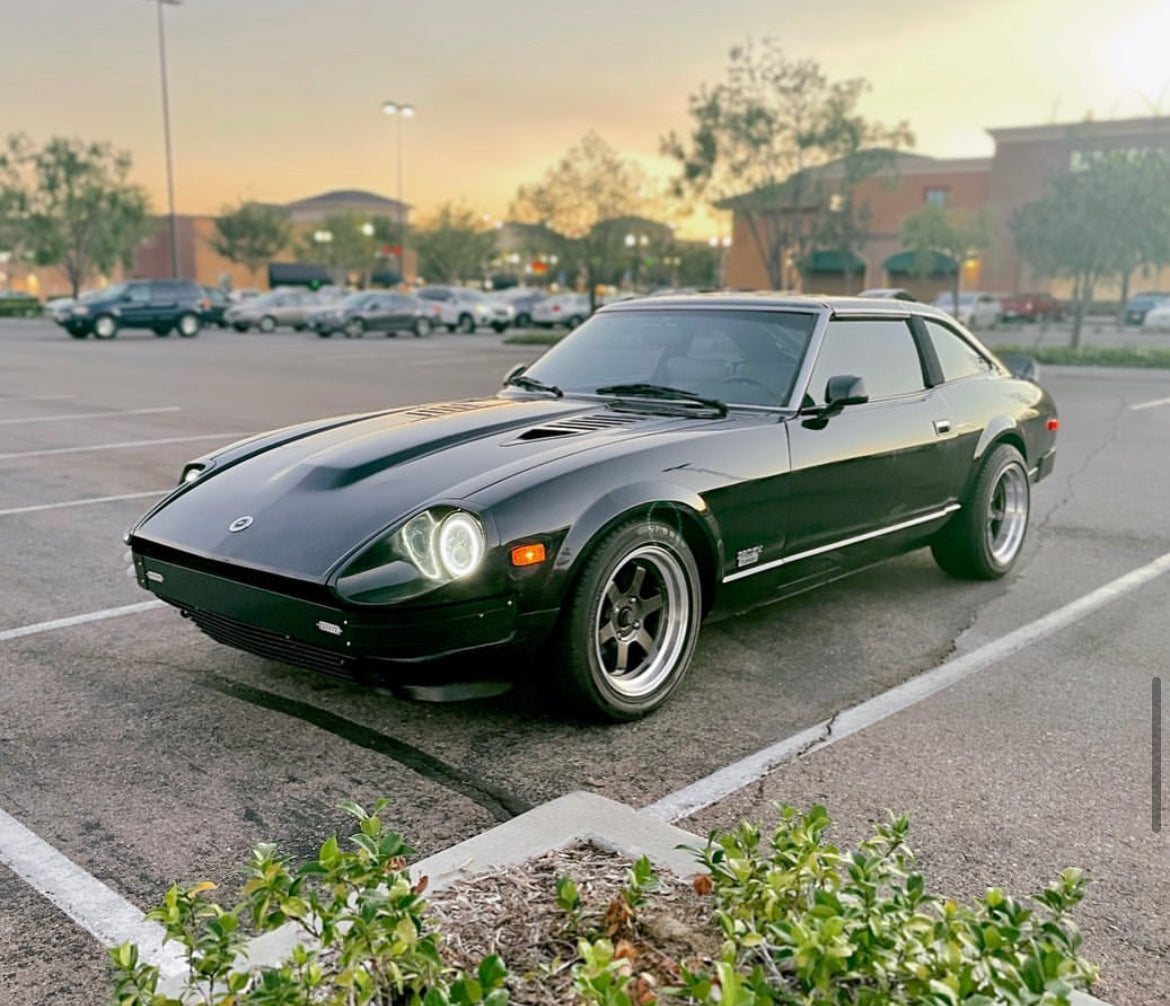

Rear hatch louvers are one of the most recognizable visual signatures on any S30 Z car, and there's a reason they show up in builds again and again - they pull the car's aggressive lines together and serve a purpose at the same time. That big rear hatch glass turns the interior into a greenhouse on hot days, and the glare alone makes highway driving legitimately miserable. For plenty of Z owners, the louvers have been sitting on the wish list for years. But the project gets bumped over questions about fitment, materials and how much work the install takes.
The hesitation makes total sense. Period-correct louvers are legitimately hard to come by, and when they do show up, the asking price tends to show it. Plastic alternatives are known to yellow and crack with age, and no one wants to drill into a numbers-matching hatch without being confident in the kit. The modern powder-coated aluminum kits have changed the game, though. Most designs hold up well against UV and corrosion, and plenty of them come off clean - with no permanent marks and no drilling regrets. It's a much improved situation from what it used to be, and I'd say it's what finally got most owners to pull the trigger on the mod.
The install rewards a little patience, especially during the alignment and dry-fit phase. Rushing that part or skipping the level check altogether will show in the finished result every time. Take your time with it and get the fitment dialed in - the payoff is a period-correct look that holds up for decades. It's one of the modifications that actually makes the car better in two ways at once - better to look at and a whole lot better to drive on a hot summer day.
Let's go through how to add those rear hatch louvers to your Datsun 280Z!
Table of Contents
The Case for Louvers on a 280Z
The rear hatch on a 280Z is nearly all glass, which is great for visibility. But on a hot summer day, it turns into an issue in a hurry. The cabin heats up fast, and at the right angle, the sun pushes straight through that back window and just bakes everything behind the seats. Any Z owner who's taken one out in July already knows what that feels like.
Louvers sit right over the rear glass and block the sunlight before it ever gets a chance to reach the interior. On a long drive, that one small addition can make the car quite a bit more pleasant to be in. At night, louvers also cut down on the headlight glare from the cars behind you - one small quality-of-life improvement that's hard to appreciate until you've got it.

How it looks matters just as much here. A set of louvers gives the 280Z a more aggressive look that pairs well with the body lines of this car. A set now brings the car closer to what original owners wanted from the start, since these were actually a dealer-installed option back in the late 1970s, and they were pretty popular at the time. In that sense, it's less a modification than a restoration of original character, and I'd argue that's one of the more satisfying moves that you can make with a classic.
These two points are worth keeping in mind before you start the install - it does help to know what louvers are meant for when you're nailing down your fitment and placement decisions. Up next is a look at how louvers line up across the different S30 variants, and it's the natural place to go from here.
Rear Louvers That Fit All S30 Z Cars
The 280Z sits on Nissan's S30 platform, which it shares with the 240Z and the 260Z - and that's welcome news if you want rear louvers. All three of these cars have the same hatch dimensions, so a louver set made for a 240Z will drop right onto a 280Z with no modifications needed.
Most manufacturers only list one model name on their kits, and the 240Z tends to get most of that attention in the product listings. A kit made for one S30 model will very likely fit yours just as well - so don't pass over something that would otherwise work just fine for your car.

With that said, you should keep a few small model-year differences in mind before you order. The weatherstripping around the hatch can change in thickness from year to year, and it also matters whether the original seals have ever been swapped out for aftermarket ones at some point. A thicker seal can push the hatch glass out just a bit, which is enough to change how snugly a louver set ends up against the car. Take a minute to measure your hatch opening and check it against the louver's listed fitment dimensions before choosing a particular kit.
Most sellers who specialize in Z-car parts already know about these year-to-year differences and can point you toward a kit that will fit your exact car. When buying from a general marketplace instead of a dedicated Z parts vendor, read through the product description closely for any fitment details that the seller may have included. A quick message with your exact model year can also help you stay away from a return shipment - in my experience, most sellers are more than happy to confirm compatibility before you even place the order.
The Best Material for Your Louvers
Aluminum has become the first choice for 280Z louvers, and it's not hard to see why. Powder-coated aluminum lasts considerably longer than the ABS plastic and fiberglass versions that came on these cars for years - and over time, that durability gap does start to add up more than it seems.
Plastic and fiberglass louvers were largely the standard when these cars were new. But plenty of Z owners have learned the hard way that neither one holds up all that well with age. After a season or two in direct sun, plastic will start to yellow and go brittle on you. Fiberglass does a little better. But it's still going to fade and develop surface cracks over the years - especially on a car that spends any time outdoors.

Aluminum just doesn't have those problems. The powder coat finish resists UV damage in ways that plastic just can't compete with, and the aluminum itself won't crack or warp, no matter how many winters and summers it goes through. It's a far lower-maintenance ownership experience - you can put them on and not worry about them again.
One more point to mention - most modern aluminum louver kits are removable. No permanent changes to the hatch, no drill holes, no commitment of any kind. Going back to stock is always an option. For a car as well-loved as the 280Z, that flexibility does mean quite a bit to most owners - and from what I've seen, it's actually one of the main reasons aluminum kits have become a good bit more popular than the older alternatives. Collectors and restorers want to leave their options open, and the removable aluminum louvers give them just that.
Get All Your Tools Ready to Go
Get everything laid out in front of you (even pick up the drill) - it only takes a few seconds. A power drill with a set of bits is the main item on the list, and you'll want a measuring tape, a level and a marker right there alongside it. Masking tape and painter's tape deserve a place on that list, too - they can save you from a frustrating mistake mid-project.
Painter's tape deserves a mention here, even if it's not the first tool that comes to mind for this type of project - it tends to only get pulled out for paint jobs. But it works great as an alignment tool here as well. Press a strip directly onto the hatch, mark your drill points right on the tape and peel it away clean when you're done - no residue, no scratches and nothing left behind. It's a small detail, but it does make the whole process much tidier.

This part is all about prep work. Those mid-install interruptions are rough - if you get halfway through drilling a hole and then have to walk away to hunt down a bit that you left somewhere across the garage, that whole rhythm just falls apart. An easy job can suddenly feel twice as long, and I see it trip up a lot of installs. The mounting steps are coming up right after this, and when you get into them, try to hold a steady pace all the way through without stopping. A well-organized workspace makes that a whole lot easier.
Start by getting all your tools laid out somewhere that you can see and reach everything without having to hunt for anything. Make sure that your drill is charged and you have the right bits ready to go, and your tape is close by.
How to Line Up Your Louvers
With your tools ready, the first step is to hold the louvers up against the hatch - no screws, no drill holes and nothing permanent yet. A dry-fit like this lets you see right where the brackets are going to land without putting a single mark on anything. It's a step that's tempting to rush. But a little patience here goes a long way.
Once everything is where you want it, mark each bracket location with a pencil or a small strip of masking tape. From there, grab a level and double-check your alignment before you do anything else. A louver that's even a little off-center will stand out every time you walk past the car - it's not a mistake that you want to make twice.

Once the alignment is where you want it, go ahead and drill your pilot holes. Make sure that your bit's the right size for your hardware, and don't rush this part. More crooked and uneven louver installs can be traced back to this exact step than to any other - and almost every time it's because somebody got impatient. A little extra care here makes all the difference.
Before you grab that drill, it's worth a quick pause - some of the newer aluminum louver kits include adhesive or clip-based mounting systems, and if yours is one of them, you might not even need a drill. Check your kit's hardware first. If it looks like it came with that sort of setup, read through the included instructions before you go any further. A few of the steps above will be a bit different depending on which way works best for your kit. No matter which way you go, the dry-fit and alignment checks still need to happen - don't skip them.
How to Care for Your Louvers
Once your louvers are mounted, the day-to-day care is pretty minimal - and most of that's about the powder-coated aluminum finish. It's extremely tough and holds up great on its own. A quick wipe-down every few weeks is all it takes, and everything will look great.
The gaps between the slats are worth a look every now and then. Leaves, dirt and small debris have a tendency to settle in there, and once the drainage path gets clogged, water has nowhere to go and will just sit there. A soft brush or a gentle low-pressure rinse is all it takes to clean it all out, and neither one will hurt the finish at all.

The rubber gaskets and pads that sit between the louvers and the hatch glass are worth a quick check every few months. They can shift around or wear down over time, and even the slightest bit of movement is enough to let bare metal touch the glass - and you definitely don't want that. Give the louvers a firm press with your hand and make sure nothing has come loose.
For cleaning, this tends to be the strongest case to choose removable over permanently bonded. To get at the hatch glass underneath, you just lift the entire unit off, clean everything out well and set it back down. With a fixed unit, you'd have to fight with the frame and cram a cloth into tight corners just to get close to it - it can add an extra minute or two to the job, and the end result still isn't as clean.
A quick check for loose hardware every now and then is all it takes to keep these louvers tight and rattle-free for years. Once that habit's second nature to you, it barely even registers as maintenance anymore.
Build Your Dream Car
A louver install on your S30 is one of those projects that ends up being more satisfying than it looks on paper. The work itself is very manageable over a weekend. The finished product looks very sharp on the car, and the whole install is reversible at any point, which takes the pressure off if you're still on the fence about committing. Patience in the alignment phase is what matters more than anything else here, so trust your level and don't rush it. The end result looks like it belonged on the car all along.
A build like this has a way of picking up its own momentum as it moves along - and with the 240Z, 260Z and 280Z, that momentum is very much wrapped up in the quality of the parts that you're working with. These are cars that legitimately reward patient work. When the parts actually fit right and hold up over time, the whole project feels better from one end to the other. The flip side is also true - bad parts slow everything down and can sometimes stop a build dead in its tracks. The parts quality is where most of the frustration lives on these builds, and it's what I see derailing more projects than anything else.

We built Skillard around that very idea. Our full catalog at Skillard.com is dedicated to Datsun Z cars (bumpers, aluminum door cards, center consoles, spoilers and plenty more), and every part in it was designed with the fit and attention that these cars deserve. Whether you're just starting out or already deep into a build, the catalog has something that will line up with where your project is.
Check us out at Skillard.com and see what's available for your Z!